
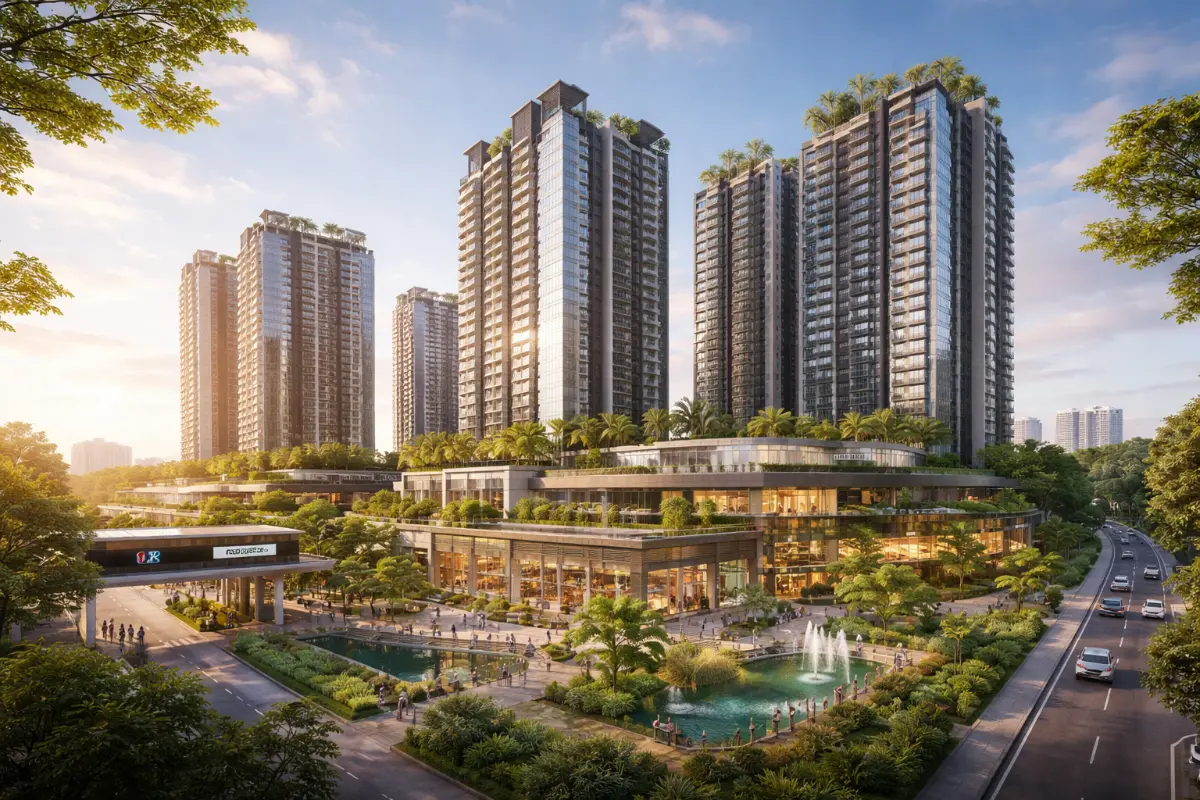
Environmental Sustainability at Tengah Garden Residences
In today’s urban landscape, environmental sustainability has become a key consideration for residential developments. Singapore, known for its forward-thinking urban planning, has made significant efforts to incorporate green initiatives into new towns. Tengah Estate is a prime example, envisioned as the city-state’s first “forest town,” with sustainability at the core of its design. Among its residential offerings, Tengah Garden Residences stands out as a development that integrates eco-friendly features, smart technologies, and green infrastructure, making it an ideal model for environmentally conscious urban living.
Tengah Garden Residences exemplifies how sustainable living can be seamlessly incorporated into a modern residential environment. The development prioritizes green spaces, energy efficiency, and low-carbon initiatives while maintaining the convenience and comfort expected in urban living. For residents, this translates to a lifestyle that not only reduces environmental impact but also promotes well-being and a stronger connection with nature. Sustainability at Tengah Garden Residences is not limited to isolated features—it is a comprehensive approach integrated into every aspect of the estate’s design and planning.
Green Spaces and Nature Integration
One of the most notable aspects of Tengah Garden Residences is its extensive incorporation of green spaces. The development is surrounded by landscaped gardens, community parks, and tree-lined pathways, reflecting the broader “forest town” concept of Tengah Estate. Walking trails and cycling paths connect different residential blocks, recreational areas, and commercial hubs, encouraging residents to engage in outdoor activities while minimizing reliance on vehicles.
These green corridors also play an important environmental role. They help mitigate the urban heat island effect, improve air quality, and support biodiversity by providing habitats for local flora and fauna. For residents, the presence of these green spaces contributes to mental well-being and promotes an active, nature-oriented lifestyle.
Energy Efficiency and Sustainable Design
Tengah Garden Residences incorporates a range of energy-efficient design features to reduce its carbon footprint. Buildings are constructed with materials that improve insulation and reduce energy consumption, while smart lighting and ventilation systems optimize electricity usage. Rooftop gardens and green terraces further enhance energy efficiency by providing natural cooling and reducing the need for air conditioning.
These design choices are complemented by the integration of renewable energy solutions, including solar-powered lighting in common areas. Such initiatives not only reduce utility costs for residents but also contribute to Singapore’s broader goals for sustainable urban development. By prioritizing energy efficiency in both construction and daily living, Tengah Garden Residences sets a benchmark for environmentally responsible housing.
Water Management and Waste Reduction
Sustainable water management is another key feature of Tengah Garden Residences. The development employs rainwater harvesting systems and water-efficient fittings to minimize wastage. Collected rainwater can be used for irrigation in gardens and green spaces, reducing the dependency on potable water for landscaping purposes.
In addition, Tengah Garden Residences integrates smart waste management systems designed to streamline recycling and reduce landfill contributions. Residents are encouraged to separate waste at the source, with designated recycling stations conveniently located throughout the estate. These initiatives promote responsible consumption and support the development’s overall environmental sustainability goals.
Smart Town Planning
Tengah Estate as a whole is planned as Singapore’s first smart town, and Tengah Garden Residences benefits from this forward-thinking approach. Smart sensors and automated systems monitor energy usage, lighting, and waste collection, ensuring resources are used efficiently. Intelligent traffic management reduces congestion and lowers vehicular emissions, while dedicated cycling and pedestrian paths encourage eco-friendly commuting.
The integration of technology and sustainability ensures that residents can live comfortably while minimizing their environmental impact. By combining smart infrastructure with green planning, Tengah Garden Residences exemplifies the future of sustainable urban living.
Community Engagement in Sustainability
Tengah Garden Residences also promotes environmental awareness and community involvement. Shared spaces, educational programs, and workshops encourage residents to adopt eco-friendly habits such as recycling, energy conservation, and sustainable gardening. This emphasis on community participation ensures that sustainability is a collective effort, fostering a culture of environmental responsibility among residents.
Conclusion
Tengah Garden Residences represents a forward-looking approach to urban living, where environmental sustainability is a central consideration. Through green spaces, energy-efficient buildings, water management systems, and smart technologies, the development provides residents with a lifestyle that is both modern and eco-conscious. By integrating sustainability into design, infrastructure, and community initiatives, Tengah Garden Residences sets a benchmark for environmentally responsible residential developments in Singapore. For those seeking a home that combines comfort, convenience, and a commitment to the environment, Tengah Garden Residences offers a compelling choice.