5 Reasons to Rent Instead of Buy in Germany in 2026
Germany has always been a nation of renters. Over 57% of German households rent their homes the highest proportion in Western Europe. And in 2026, with interest rates still elevated and property prices stubbornly high in major cities, the case for renting has arguably never been stronger.
If you are weighing up the rent vs buy decision in Germany right now, here are five compelling reasons why renting might be the smarter choice for you this year.
1. Mortgage Rates Are Still High — And the Maths Doesn’t Add Up
After years of near-zero interest rates, the European Central Bank raised rates sharply between 2022 and 2024. While rates have begun to ease slightly, the average mortgage rate in Germany in 2026 still sits well above the historic lows many buyers locked in before 2022.
According to the Deutsche Bundesbank, average mortgage rates for 10-year fixed terms remain significantly above 3.5% — meaning monthly repayments on a typical family home now far exceed what renting the equivalent property would cost. For many households, the monthly saving from renting versus servicing a mortgage runs into hundreds of euros.
That gap matters. When you rent, the difference between what you would pay on a mortgage and what you actually pay in rent is money you can save, invest, or use to improve your quality of life today.
2. Property Prices Have Not Corrected as Much as Expected
Many buyers held off in 2022 and 2023 expecting a major price correction. That correction came — but it was shallower than forecast, particularly for well-located properties in the greater Ulm, Stuttgart and Munich regions.
The German Federal Statistical Office (Destatis) reported that while prices fell around 8–10% from their 2022 peak, they remain 40–60% above pre-pandemic levels in most of Baden-Württemberg. In other words, even after the dip, buying is still expensive and renting a comparable property remains significantly cheaper on a month-to-month basis.
3. Renting Gives You Flexibility in an Uncertain Job Market
The post-pandemic economy has fundamentally changed how people think about careers. Remote work, company relocations, and shifting industry landscapes mean that being locked into a 25-year mortgage in one location carries real risk. What happens if your employer moves, your industry restructures, or you simply want a change?
Renting provides an exit. Most German rental contracts (Mietvertrag) can be terminated with three months’ notice. Selling a property, by contrast, can take months and carry significant transaction costs typically 7–12% of the purchase price in taxes, notary fees and agent commissions.
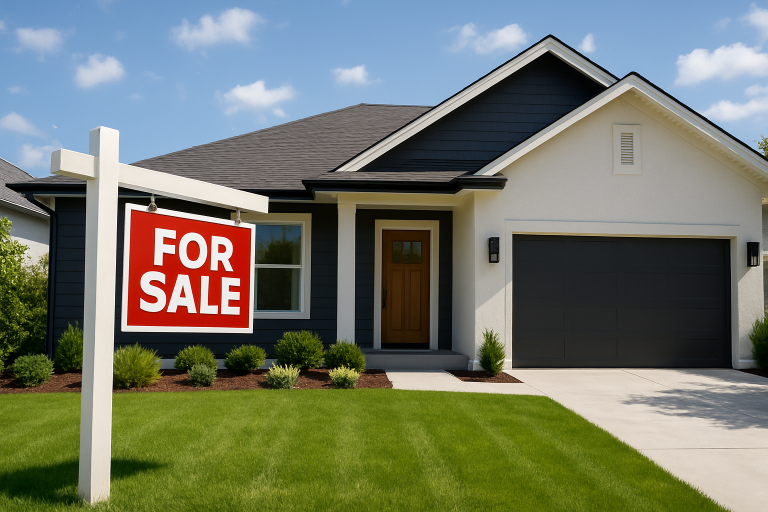
For families who want space and stability without the long-term lock-in, renting a modern family home is increasingly the practical choice. New developments like the Riverside Wohnpark in Herbrechtingen offering terraced houses for rent near Ulm with 120 m² of space, a private garden and two parking spaces show that renting no longer means compromising on quality or size.
4. New-Build Rentals Offer Better Quality Than Ever Before
A common argument for buying is that you get a nicer home. In 2026, that argument is increasingly hard to sustain. A new generation of purpose-built rental developments across Germany is setting a high standard KfW-40 energy efficiency, fitted kitchens, fast broadband, EV charging points and smart home features are now standard in many new rental properties.
The energy efficiency angle is particularly important. Under the KfW efficiency programme, new-build properties certified to KfW-40 standard consume less than half the energy of a reference building. For tenants, this translates directly to lower heating bills often saving €1,000–1,500 per year compared with an older rental property.
The days of renting meaning draughty old flats with aging boilers are over. The best rental properties in Germany today are genuinely better equipped than many purchased homes.
5. You Avoid the Hidden Costs of Ownership
The purchase price of a property is only the beginning. First-time buyers in Baden-Württemberg face property transfer tax of 5%, plus notary and land registry fees of around 1.5 – 2%, plus estate agent commission of up to 3.57% all before they have even moved in. That is roughly 10% of the purchase price gone before a single mortgage payment is made.
Then there is ongoing maintenance. Roof repairs, boiler replacements, window upgrades the rule of thumb used by financial planners is to budget 1 – 1.5% of a property’s value per year for maintenance. On a €400,000 home, that is €4,000–6,000 per year that renters simply do not pay.
When all these costs are factored in, the true cost of ownership in Germany in 2026 is substantially higher than the mortgage payment alone.
So Should You Rent or Buy?
The honest answer is: it depends on your personal situation. Buying makes sense if you have a large deposit, plan to stay in one place for 10+ years, and find a property priced below market value. But for the majority of people in Germany in 2026 particularly families looking for space, flexibility and manageable monthly costs renting is the financially smarter choice.If you are considering renting a modern terraced house in the Ulm region, you can browse current availability at Riverside Herbrechtingen a KfW-40 development of 48 family homes with gardens, just 40 minutes from Ulm by rail.