GROUNDFIX Micropiles: Controlled, Low-Disruption Underpinning for Existing Foundations
When differential settlement, structural cracking or reduced bearing performance occurs, the priority is straightforward: transfer loads safely to competent strata—while keeping disruption to the building and its use to a minimum. In this context, GROUNDFIX micropiles are a highly effective solution for refurbishment projects, industrial environments, and sites with restricted access.
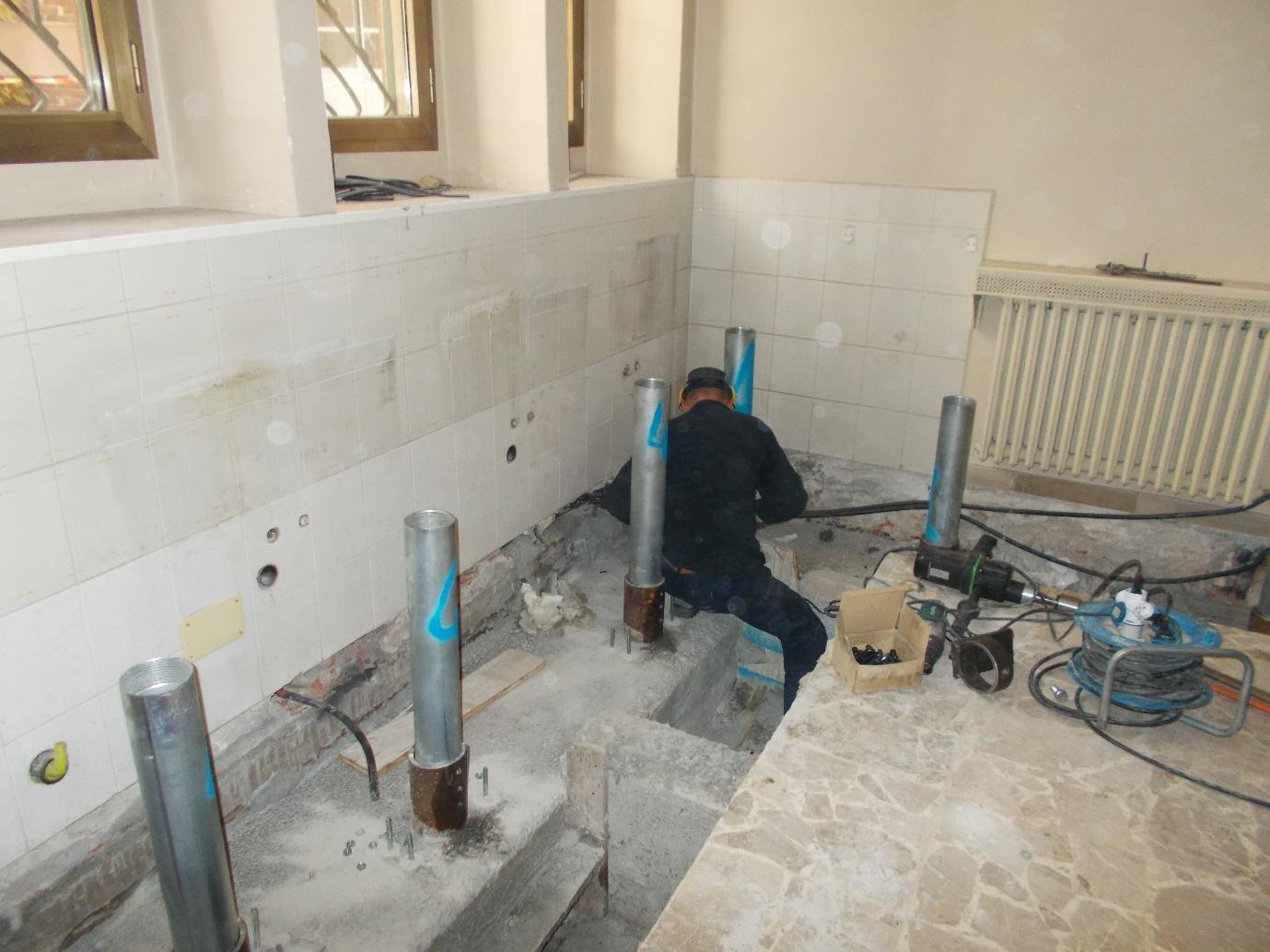
Unlike traditional approaches that often require extensive excavation or heavy plant, GROUNDFIX is designed to operate with compact equipment, delivering precise execution and a low-impact site footprint.
What are GROUNDFIX micropiles?
GROUNDFIX micropiles are foundation strengthening elements installed using tubular modules advanced into the ground with a hydraulic system. Their purpose is to transfer structural loads from the existing foundation to deeper, more competent strata, reducing risks associated with:
- Differential settlement and ground movement
- Inadequate underpinning or legacy foundations not verified to modern requirements
- Change of use and increased loads (plant, fit-out, new layout)
- Soft soils, made ground, or variable strata
In practical terms, it is a micropiling solution tailored for refurbishment, where control and adaptability are as important as ultimate performance.
Key benefits of GROUNDFIX for underpinning
1) Low disruption in occupied or existing buildings
In refurbishment, every demolition, excavation and service interference brings cost and risk. GROUNDFIX can operate in tight spaces with a limited logistical footprint, typically resulting in:
- Reduced impact on finishes, partitions and building operation
- Fewer “downtime” periods due to enabling works
- Better compatibility with occupied or live industrial environments
2) Controlled installation and traceability
A major advantage in micropiling is the ability to work in a controlled and auditable manner. During installation, key execution parameters are recorded (in line with the site procedure), providing objective criteria to validate progress and ground response.
3) High adaptability to complex foundation geometry
Every foundation is different—ground beams, pads, slabs, loadbearing walls, low headroom, party wall constraints, etc. GROUNDFIX lends itself to bespoke solutions in terms of:
- Pile locations and spacing
- Connection details to the existing foundation
- Phased installation sequences
- Integration with complementary techniques (e.g., resin injection, local strengthening)
When are GROUNDFIX micropiles recommended?
Micropiles are particularly suitable when the problem cannot be solved by shallow ground improvement alone, or when a clearly defined structural load path is required.
Typical applications include:
- Residential properties showing settlement-related cracking (houses, terraces, older buildings)
- Industrial units where works must be fast and access is restricted
- Extensions or change of use (increased loads, new plant, major refurbishment)
- Underpinning of localised elements: walls, columns, point supports, corners
- Sites with made ground and heterogeneous stratigraphy, where certainty requires “going to competent”
What does a GROUNDFIX intervention look like? (High-level overview)
While the detail will always be project-specific, the workflow typically follows this structure:
1) Assessment and diagnosis
- Condition survey (cracks, distortion, signs of movement)
- Document review (drawings, previous alterations, extensions)
- Geotechnical investigation where required (testing, ground characterisation)
2) Underpinning design
- Define the objective: stabilise, reduce risk, recover capacity, etc.
- Set pile layout and quantity
- Define target depth and acceptance criteria
- Detail the micropile-to-foundation connection
3) Site execution
- Set-out and enabling works
- Phased installation to maintain stability and operational continuity
- Final connection and making good (per project details)
4) Technical close-out
- Installation records and quality checks
- Handover documentation (as per agreed scope)
Micropiles + other methods: combined strategies
In real refurbishment scenarios, the best outcome often comes from a combined approach, for example:
- Micropiles to transfer loads to competent strata
- Injections to improve soil–structure contact or treat localised zones
- Local strengthening (plates, stitching, thickening) where punching or concentrated stresses are present
This hybrid strategy helps optimise cost, programme and intervention level—especially where access is limited, operations must continue, or vibration needs to be minimised.
Why GROUNDFIX is highly competitive for refurbishment underpinning
From a client value perspective (engineers and owners alike), GROUNDFIX typically stands out for:
- Faster mobilisation versus methods requiring extensive excavation
- Reduced disruption internally and externally
- Strong performance in difficult constraints (low headroom, restricted access)
- A controlled approach compatible with phased works
- Wide applicability: residential, industrial, heritage, refurbishment