
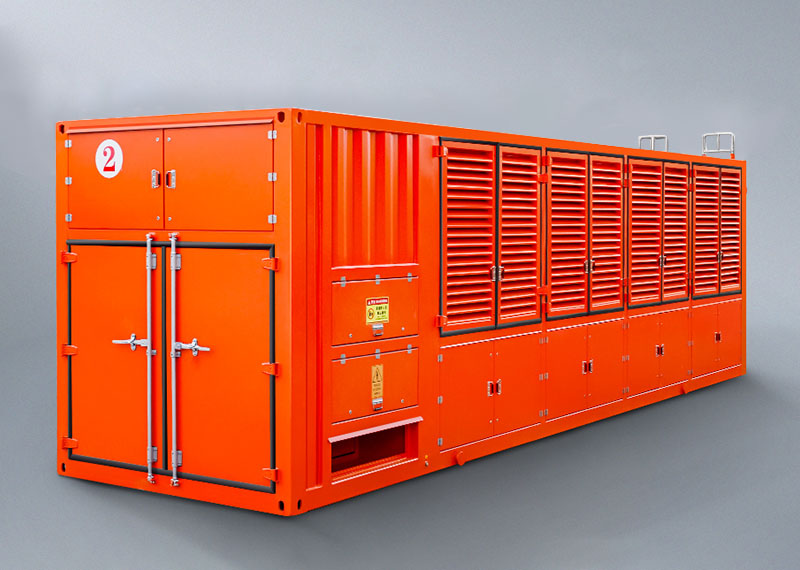
How an RLC Load Bank Manufacturer Supports Data Center Commissioning
Modern data centers are built to provide uninterrupted services for cloud computing, financial systems, healthcare applications, telecommunications, and enterprise operations. Even a brief power interruption can lead to significant financial losses and operational disruptions. This is why thorough power system testing is an essential part of the commissioning process. A reliable RLC load bank manufacturer plays a vital role by providing advanced testing equipment that verifies the performance of critical electrical infrastructure before a data center becomes operational.
RLC load banks simulate real-world electrical loads by combining resistive, inductive, and capacitive elements. This allows engineers to test complete power systems under realistic operating conditions and identify potential issues before the facility begins serving customers.
Ensuring Reliable Backup Power Systems
One of the primary responsibilities of an RLC load bank during commissioning is testing backup power systems. Data centers depend heavily on diesel or gas generators to maintain operations during utility outages.
An experienced RLC load bank manufacturer designs equipment capable of applying controlled electrical loads that closely replicate actual operating conditions. This enables engineers to verify generator capacity, voltage regulation, frequency stability, and overall system performance before the generators are placed into service.
Testing UPS Performance
Uninterruptible Power Supply (UPS) systems are another critical component of every data center. They provide immediate backup power while generators start and stabilize.
RLC load banks help verify that UPS systems can:
- Support their rated load capacity
- Maintain stable voltage output
- Operate efficiently under varying load conditions
- Transfer power without interruption
- Handle extended runtime requirements
These tests ensure the UPS system will perform reliably during real power failures.
Simulating Real Operating Conditions
Unlike simple resistive load banks, RLC load banks create a balanced combination of resistive, inductive, and capacitive loads. This closely matches the electrical characteristics of actual servers, networking equipment, cooling systems, and other data center devices.
By accurately simulating real operating environments, engineers can evaluate how the complete electrical infrastructure performs under realistic power factor conditions rather than ideal laboratory scenarios.
Identifying Hidden System Problems
Power systems often appear to function correctly when operating with little or no load. However, hidden problems may only become visible during full-load operation.
A professional RLC load bank manufacturer provides equipment that helps uncover issues such as:
- Improper generator sizing
- Voltage instability
- Frequency fluctuations
- Cooling system deficiencies
- Incorrect control settings
- Electrical connection problems
Finding these issues during commissioning prevents costly failures after the data center becomes operational.
Supporting Integrated System Testing
Data center commissioning involves much more than testing individual pieces of equipment. Engineers must verify that generators, UPS systems, automatic transfer switches, switchgear, transformers, and distribution systems all work together as an integrated power network.
RLC load banks enable comprehensive system testing by applying controlled loads across multiple components simultaneously. This confirms that every part of the electrical infrastructure responds correctly during normal operation and emergency conditions.
Improving Commissioning Efficiency
Time is an important factor during data center construction. Delays in commissioning can postpone customer deployments and increase project costs.
Modern RLC load banks often include advanced digital control systems that simplify testing procedures through programmable load steps, automated test sequences, real-time monitoring, and detailed performance reporting. These features allow commissioning teams to complete testing more efficiently while maintaining high levels of accuracy.
Enhancing Safety During Testing
Power system testing involves high electrical loads that require strict safety measures. Reputable manufacturers incorporate numerous protective features into their equipment, including overload protection, overtemperature monitoring, emergency stop functions, cooling system supervision, and fault detection.
These safety systems protect both technicians and valuable electrical infrastructure throughout the commissioning process.
Supporting Future Expansion
Many data centers are designed with future growth in mind. As computing demand increases, additional generators, UPS units, and electrical distribution equipment may be installed.
An experienced RLC load bank manufacturer offers scalable and customizable solutions that support both initial commissioning and future expansion projects. This flexibility allows facility operators to continue testing new equipment using compatible load bank systems as their infrastructure grows.
Providing Long-Term Technical Support
Commissioning is only the beginning of a data center’s operational life. Backup power systems require periodic testing throughout their service life to ensure continued reliability.
Many manufacturers provide technical assistance, maintenance guidance, spare parts availability, calibration services, and software updates that help customers maintain accurate and dependable testing capabilities for years to come.
Conclusion
A dependable RLC load bank manufacturer is an essential partner in successful data center commissioning. By providing advanced equipment that accurately simulates real-world electrical loads, manufacturers help engineers validate generators, UPS systems, transfer switches, and complete power distribution networks before the facility begins operation. Through reliable testing, enhanced safety features, intelligent controls, and long-term technical support, RLC load banks contribute significantly to the reliability, efficiency, and operational readiness of modern data centers, helping ensure continuous power for mission-critical applications.