Applications of Voice Coil Actuators in Robotics and Automation Systems
Voice coil actuators are becoming an essential component in modern robotics and automation due to their ability to deliver precise, fast, and smooth linear motion. These devices use electromagnetic principles to generate controlled force, making them highly suitable for applications where accuracy and responsiveness are critical. As robotics systems continue to evolve toward higher precision and intelligence, the demand for advanced motion control solutions has increased significantly.
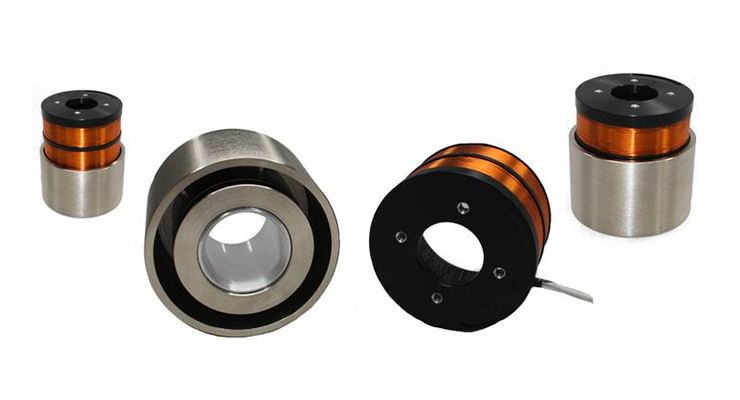
In many advanced engineering systems, a voice coil actuator is preferred because it provides direct-drive linear motion without the need for gears or mechanical transmission. This eliminates backlash and reduces mechanical wear, which is particularly important in robotic systems that require consistent repeatability over long operational cycles. The result is a compact and efficient actuation solution that supports both high-speed movement and fine positional control.
Role of Voice Coil Actuators in Robotics
In robotics, motion precision and responsiveness are essential for tasks ranging from assembly to delicate manipulation. Voice coil actuators are widely used in robotic subsystems where fine control is required, such as end-effectors, micro-positioning stages, and sensory alignment mechanisms.
Their ability to generate smooth, proportional force makes them ideal for applications that involve continuous adjustments rather than discrete movements. This allows robotic systems to perform tasks with higher accuracy and reduced vibration.
Key Applications in Automation Systems
Automation systems rely heavily on repeatable and reliable motion control. Voice coil actuators are commonly integrated into these systems due to their fast response and high positioning accuracy.
Typical applications include:
- High-speed pick-and-place robotic arms in manufacturing lines
- Precision alignment systems for optical and electronic components
- Automated inspection systems in quality control processes
- Semiconductor manufacturing equipment requiring nano-level adjustments
- Conveyor-based sorting systems with dynamic positioning needs
In these environments, even slight motion errors can lead to inefficiencies or product defects, making precision actuation a critical requirement.
Advantages in Robotic Integration
One of the main reasons voice coil actuators are widely adopted in robotics is their compatibility with closed-loop control systems. By integrating sensors such as encoders or laser displacement sensors, robotic systems can achieve real-time feedback and extremely accurate positioning.
Other advantages include:
- Rapid response to control signals for dynamic motion tasks
- Smooth and vibration-free operation
- Compact design suitable for space-constrained robotic modules
- High repeatability for repetitive automation tasks
- Minimal maintenance due to non-contact operation
These characteristics make them particularly valuable in environments where uptime and precision are equally important.
Enhancing Automation Performance
In industrial automation, performance is often measured by speed, accuracy, and reliability. Voice coil actuators contribute to all three by enabling faster cycle times and reducing mechanical complexity within motion systems.
Their direct-drive nature allows automation engineers to simplify system architecture while improving overall efficiency. This is especially beneficial in advanced manufacturing sectors such as electronics assembly, medical device production, and semiconductor fabrication.
Additionally, their ability to operate quietly and with minimal friction helps maintain stable operating conditions in sensitive production environments.
Conclusion
Voice coil actuators play a vital role in modern robotics and automation systems by delivering precise, responsive, and reliable linear motion. Their simple yet powerful design makes them ideal for applications that demand both speed and accuracy. As automation technology continues to advance, these actuators will remain a key enabling component in high-performance robotic systems across multiple industries.