
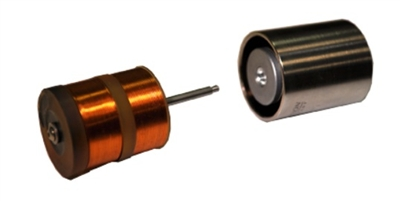
How a Voice Coil Linear Actuator Achieves Smooth and Precise Motion
Voice coil linear actuators are widely used in precision engineering systems where smooth motion, fast response, and high positioning accuracy are essential. Their ability to generate direct linear force through electromagnetic interaction makes them a preferred choice in advanced automation, optics, and medical technologies.
Unlike traditional mechanical systems that rely on gears or screw-driven mechanisms, a voice coil linear actuator produces motion through a direct-drive electromagnetic process. This eliminates backlash, reduces friction, and allows extremely fine control of movement, making it ideal for applications that demand both speed and precision.
The Principle Behind Smooth Motion
The smooth motion of a voice coil linear actuator is based on the Lorentz force principle. When an electric current passes through a coil placed in a permanent magnetic field, a force is generated perpendicular to both the current and the magnetic flux.
This force is directly proportional to the current, allowing precise control over motion without intermediate mechanical conversion. Because there are no gears or contact-based transmission elements, the movement remains smooth and vibration-free even at very small displacements.
Why Direct Drive Ensures Precision
One of the key reasons voice coil actuators achieve high precision is their direct-drive structure. By removing mechanical linkages, the system avoids common issues such as backlash, hysteresis, and mechanical wear.
This design offers several advantages:
- Instant response to electrical input signals
- No mechanical play or lost motion
- Consistent force output throughout the stroke
- Reduced vibration and mechanical noise
These characteristics allow engineers to achieve micron-level or even sub-micron positioning accuracy in advanced systems.
Role of Magnetic Field Uniformity
The quality of motion in a voice coil linear actuator depends heavily on the uniformity of its magnetic field. A well-designed magnetic circuit ensures that force remains consistent across the entire movement range.
Key factors that influence smooth operation include:
- Stable magnetic flux density
- Precision-aligned coil and magnet structure
- High-grade permanent magnets such as neodymium
- Optimized air gap design for consistent force output
When these elements are properly engineered, the actuator can deliver highly stable and predictable motion behavior.
Feedback Systems and Motion Control
To achieve precise positioning, voice coil linear actuators are typically integrated with closed-loop control systems. These systems use sensors such as encoders, capacitive probes, or laser displacement sensors to continuously monitor position.
The controller adjusts current in real time based on feedback, ensuring that the actuator reaches and maintains the desired position accurately. This dynamic correction process is essential for achieving both smooth and precise motion under varying loads.
Importance of Low Moving Mass
Another factor contributing to smooth motion is the low moving mass of the actuator. Lightweight coil or magnet assemblies allow rapid acceleration and deceleration without overshoot or instability.
Benefits of reduced moving mass include:
- Faster response to control signals
- Improved dynamic stability
- Lower energy consumption
- Reduced mechanical stress on components
This makes voice coil actuators especially effective in high-speed precision applications.
Applications Requiring Smooth Precision Motion
Voice coil linear actuators are used in a variety of industries where motion quality is critical. Common applications include:
- Optical lens focusing and alignment systems
- Semiconductor wafer positioning equipment
- Medical imaging and surgical devices
- High-precision testing and calibration systems
- Robotics requiring delicate manipulation
In each of these fields, smooth and accurate motion directly impacts system performance and output quality.
Conclusion
Voice coil linear actuators achieve smooth and precise motion through a combination of direct-drive electromagnetic force, uniform magnetic field design, and advanced feedback control systems. Their ability to eliminate mechanical friction and deliver instant response makes them indispensable in modern precision engineering. As automation technologies continue to advance, these actuators will remain a key solution for high-performance motion control systems.